Core Differentiator: Sensor Fusion vs. Single-Sensor
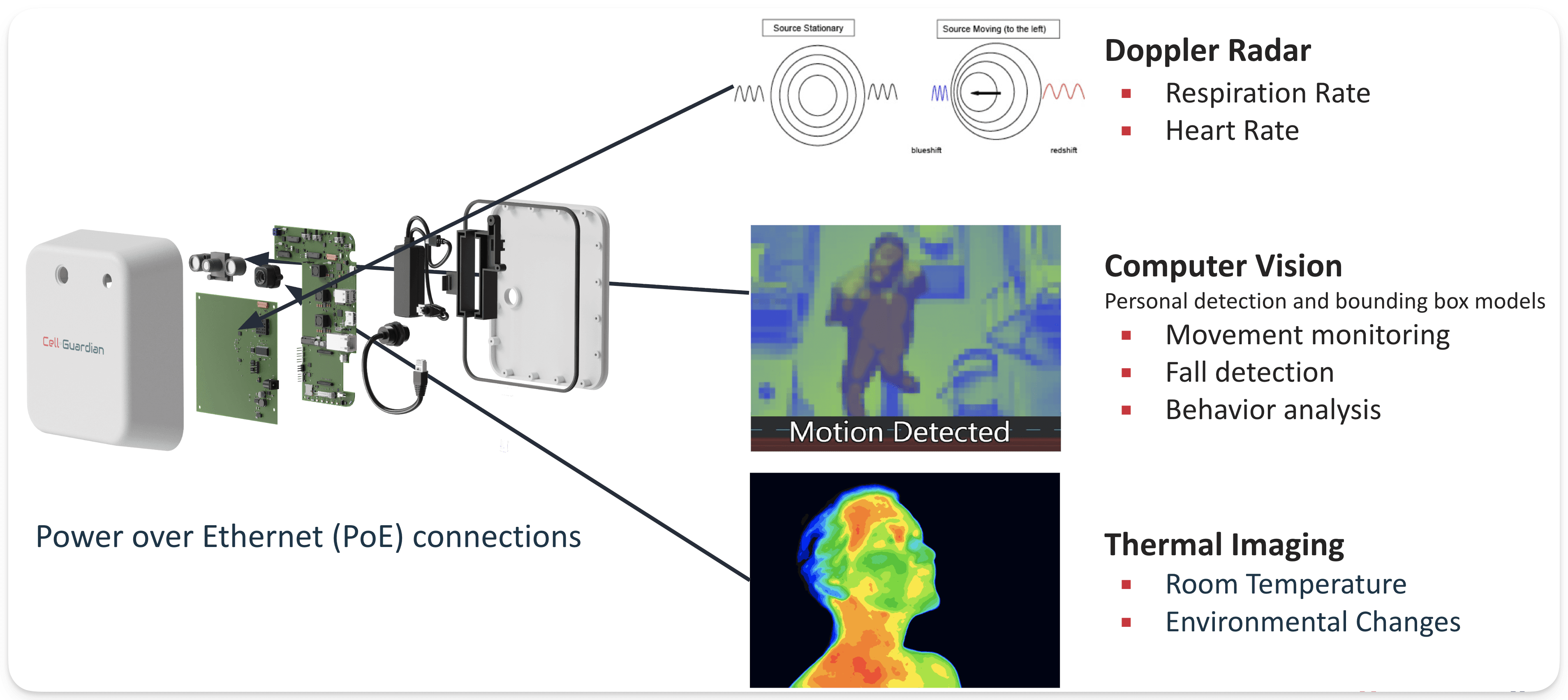
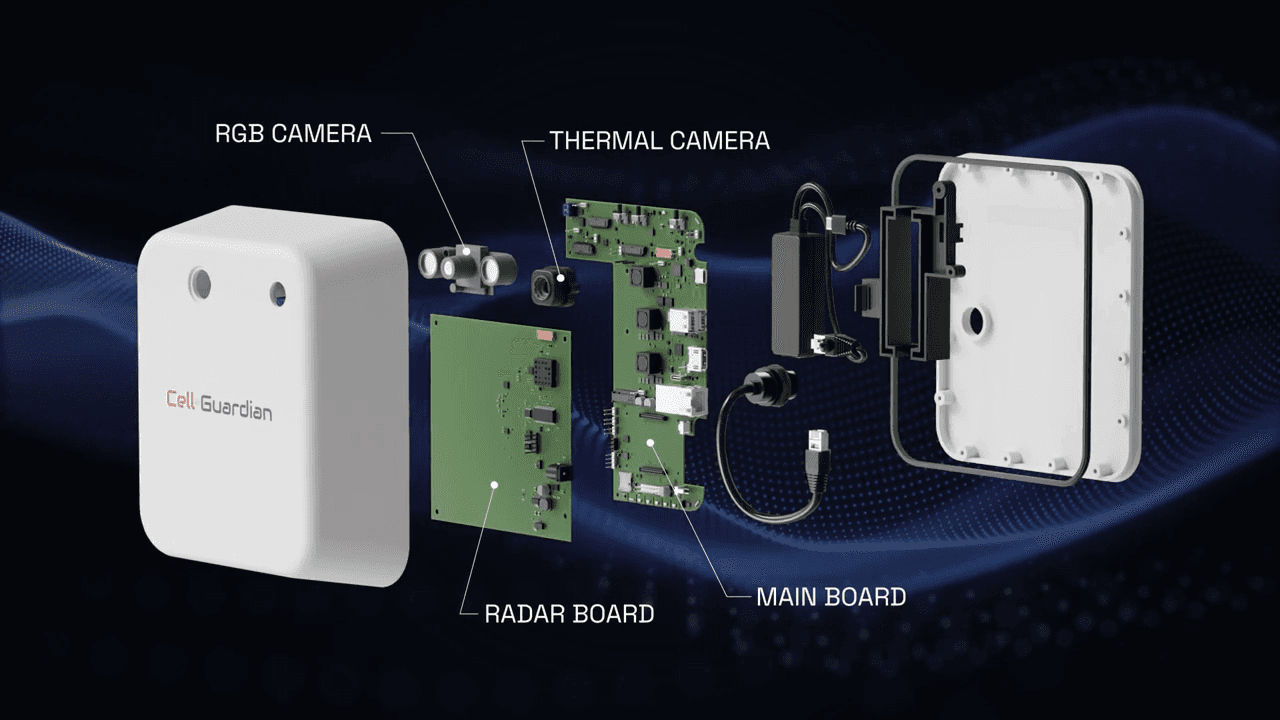
Competitors often rely on a single sensor, which is like trying to understand a situation with only one of your senses. Cell-Guardian uses patented sensor fusion, combining multiple data streams into one complete and intelligent picture. Our AI merges this data into an "alarm protocol," dramatically reducing false alarms and allowing us to detect a wider range of events that single-sensor systems cannot.
Doppler Radar for Life Signs
Purpose: To detect life by monitoring movement, especially the tiny motions of breathing.
Details: It uses Frequency Modulated Continuous Wave (FMCW) Doppler Radar with Multiple Input and Multiple Output (MIMO) capability to detect the rise and fall of a chest, even through a heavy blanket. This is our primary sensor for confirming an inmate is alive and breathing.
Thermal Imaging for Presence & Temperature
Purpose: To see heat, which allows us to confirm an inmate's presence and monitor the room temperature without needing a regular camera for constant surveillance.
Details: This sensor creates a "heat map" of the cell, providing a privacy-protecting view. With dual-gain smart pixels and a fast refresh rate, it can provide precise spot temperature measurements.
RGB Camera & Computer Vision for Evidence & Analysis
Purpose: To act as a high-resolution witness and to enable the AI to perform advanced movement analysis in real-time.
Details: The RGB camera provides a constant video stream that is fed directly to the system's Computer Vision algorithms. The AI analyzes this feed in real-time, using pose detection and bounding box models to identify critical events like falls. For inmate privacy, this live video feed is NOT visible to correctional staff for routine monitoring. The system only records and makes the clear, time-stamped video visible to staff after a critical incident has been detected and logged, providing the irrefutable proof needed for incident reports and legal defense.